
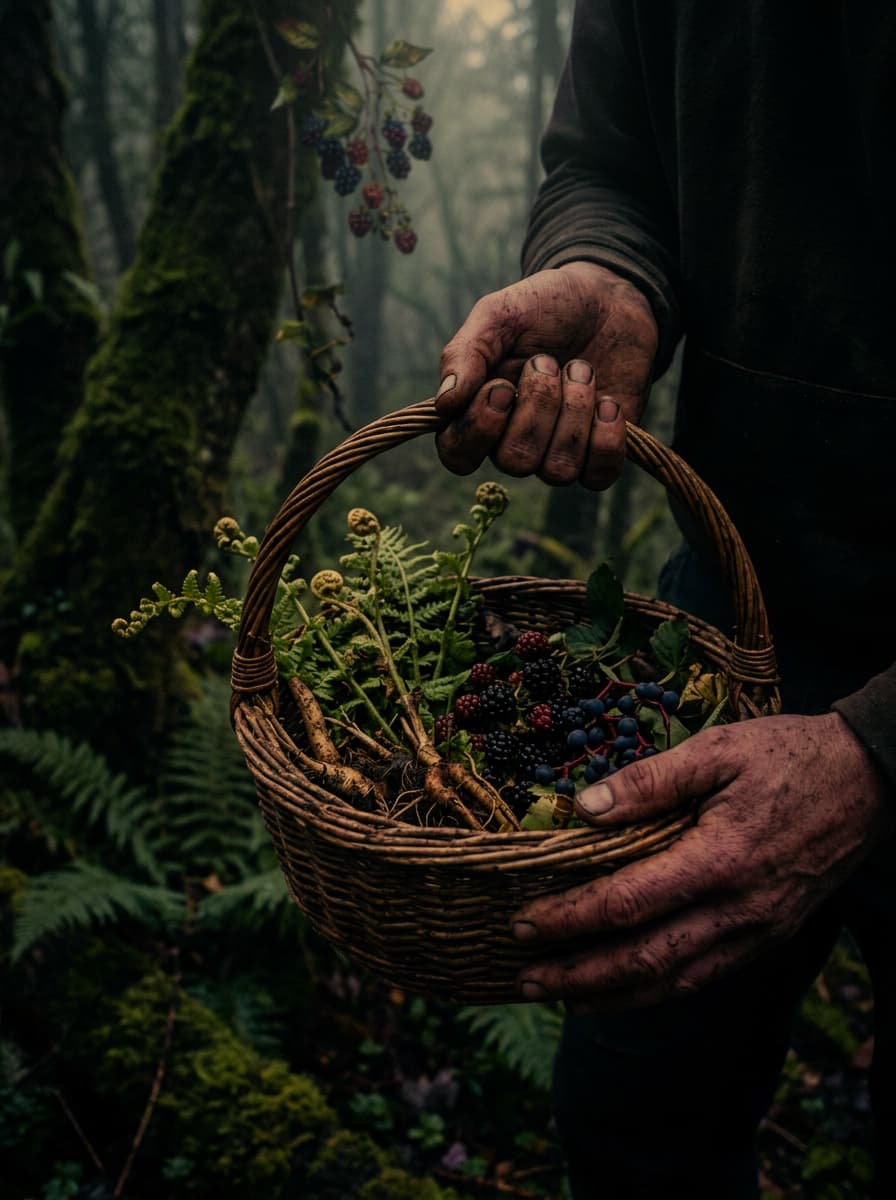
Yarrow grows where nobody asks it to. Field edges, the gravel shoulder of a road, the forgotten corner of a churchyard. Pull a stem and the leaves come apart like green lace, feathered so finely the plant's Latin name, millefolium, means a thousand leaves. It has been called soldier's woundwort, nosebleed plant, and devil's nettle. Achilles is said to have carried it into battle to close his men's wounds.
We are not making medicine. We make beer. But when we set out to brew the Hedge Witch, we wanted the bitterness to come from somewhere older than hops. Yarrow was there before hops ever entered a brewhouse, one of the bittering herbs of the gruit tradition, back when every farmhouse guarded its own blend.
It is not a gentle flavor. Yarrow is savory and slightly medicinal, with a dry, resinous edge that lingers at the back of the throat. Paired with lemon verbena it turns bright instead of brooding. The old herbals promised it would cure a fever. We promise only that it makes a good saison, and that it grows for free at the edge of the wild if you know where to look.
Stay Close
Field notes, now and then.
First word on drops, foraging walks, and the occasional recipe. No noise, just a note when something blooms.